Remond Industry

Emil Remond

Nevers, France 1840 — Dallas, Texas 1906

Utopian colonist. Confederate cavalryman. Brickmaker. The amateur geologist who read the white cliffs of the Trinity River and found a city of cement inside them.

The Story

In 1856, a sixteen-year-old from Nevers, France — educated by a friar, finished by books and travel — stepped off the long road to Texas to join his half-brother Jean Priot at La Réunion, a utopian colony of French, Belgian, and Swiss settlers on the chalk bluffs three miles west of the young village of Dallas. The colony's company failed within eighteen months. Emil Remond stayed for the rest of his life.

He fought four years of war, came home to nothing, and married Ceasarine Santerre — daughter of the colony's chief of agriculture — in one of the first weddings held in Dallas after the Civil War. He could not afford a ring, so he bored a hole through a dime. She wore the dime the rest of her days.

Then he went to work on the ground itself: bricks at Hutchins, bricks with his brother, the first engine house in East Dallas, the first brick oven in the main district. And all the while he kept picking at the white rock on the west bank of the Trinity — the "white cliffs" the colonists had settled beneath — until, in the late 1880s, he proved what he had suspected: the land was made of lime and cement waiting to be burned.

Timeline

The Geologist

Remond's lasting mark on Dallas is geological. From his parcel west of the ruined colony he worked the Austin chalk — burning it, testing it, mixing it — and concluded that West Dallas sat on raw material for an industry. His own Iola Cement Plant did not last, but the deposits he identified drew the money that built the great plants of the early 1900s, the smokestacks of Cement City, and the concrete that raised modern Dallas.

He was more than a prospector. He examined mineral deposits across a half-dozen counties, kept a laboratory in his home, and collected prehistoric fossils — including the bone of a mastodon he pulled from a sand drift in City Park and exhibited at the early State Fairs of Texas. He was an active member of the Dallas Commercial Club, forerunner of the Chamber of Commerce.

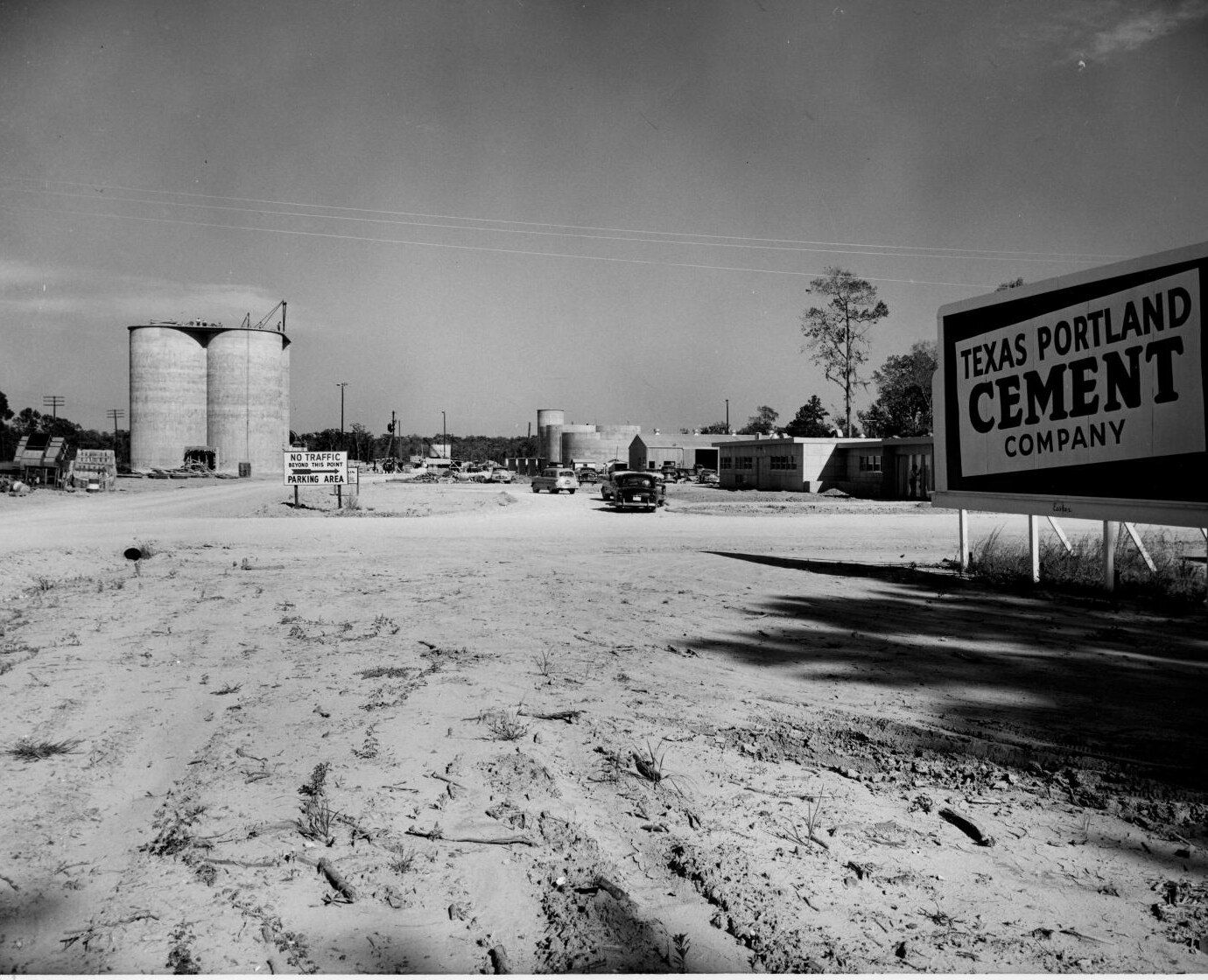
Cement City. The industry Remond's discovery seeded grew into an incorporated company town between Chalk Hill and Westmoreland roads: plants of Trinity Portland Cement (opened 1907) and Southwestern States Portland Cement, a post office, a school system absorbed into Dallas ISD in 1928, and the workers' village of Cemento Grande, whose small cemetery — El Camposanto de Cemento Grande — still lies behind the gates on Cockrell Hill Road.

Family

Ceasarine Santerre Remond (1839–1923) was the eldest of the seven children of François Santerre — a scholarly farmer born near Blois in 1809, who led agricultural development at La Réunion — and Marie Catherine Launey. The Santerres crossed the Atlantic in two small sailing vessels, sixty days at sea. Emil and Ceasarine had no children; forty years of marriage, one dime.

Jean Priot, the half-brother who brought Emil to Texas, served in the Confederate quartermaster corps and later joined Emil in the brick business. The families kept intertwining: Ceasarine's brother Raphael Santerre married Ernestine Priot. Her nephew George Henry Santerre wrote the colony's standard history, White Cliffs of Dallas (1955), and led the restoration of the cemetery where the Remonds, Santerres, and their neighbors rest.

Sources

  1. Emil Remond and Ceasarine Santerre Remond — Dallas County Pioneer Association
  2. The François Santerre Family — Dallas County Pioneer Association
  3. La Réunion (Dallas) — Wikipedia
  4. Cement, Texas — TXGenWeb, Dallas County
  5. 19th Texas Cavalry Regiment — Wikipedia
  6. La Reunion Cemetery Historical Marker — HMdb
  7. La Reunion Cemetery's upkeep an eternal problem — The Dallas Morning News, 2010
  8. Legacies: A History Journal for Dallas and North Central Texas, v.13 n.2 (Fall 2001) — Portal to Texas History
  9. The Almost Forgotten Community of Cemento Grande — Dallas County Chronicle, Fall 2016
  10. George Henry Santerre, White Cliffs of Dallas: The Story of La Reunion, the Old French Colony (Dallas: Book Craft, 1955)