The Story
In 1856, a sixteen-year-old from Nevers, France — educated by a friar, finished
by books and travel — stepped off the long road to Texas to join his half-brother Jean Priot at
La Réunion, a utopian colony of French, Belgian, and Swiss settlers on the chalk bluffs three
miles west of the young village of Dallas. The colony's company failed within eighteen months.
Emil Remond stayed for the rest of his life.
He fought four years of war, came home to nothing, and married Ceasarine Santerre — daughter
of the colony's chief of agriculture — in one of the first weddings held in Dallas after the
Civil War. He could not afford a ring, so he bored a hole through a dime. She wore the dime the
rest of her days.
Then he went to work on the ground itself: bricks at Hutchins, bricks with his brother,
the first engine house in East Dallas, the first brick oven in the main district. And all the
while he kept picking at the white rock on the west bank of the Trinity — the "white cliffs" the
colonists had settled beneath — until, in the late 1880s, he proved what he had suspected:
the land was made of lime and cement waiting to be burned.
He never saw a dollar from it. His own plant, the Iola Cement Works, did not last. When he
died in 1906 the discovery had made no one rich, least of all him — it took four more months
before Cesarine sold the last of his cement land to the Iola Portland Cement Company, the only
payday the family ever collected, and it arrived after he was gone. The men who built fortunes
on what he found — Texas Portland Cement & Lime, then Trinity Portland — were investors from
Galveston who heard about the rock secondhand. He supplied the proof. They supplied the capital.
The money went where the capital went.
The Geologist
Remond's lasting mark on Dallas is geological. From his parcel west of the ruined colony he
worked the Austin chalk — burning it, testing it, mixing it — and concluded that West Dallas sat
on raw material for an industry. His own Iola Cement Plant did not last, but the deposits he
identified drew the money that built the great plants of the early 1900s, the smokestacks of
Cement City, and the concrete that raised modern Dallas. He was right about the rock. He was
simply not the one who got to cash that in.
He was more than a prospector. He examined mineral deposits across a half-dozen counties,
kept a laboratory in his home, and collected prehistoric fossils — including the bone of a
mastodon he pulled from a sand drift in City Park and exhibited at the early State Fairs of
Texas. He was an active member of the Dallas Commercial Club, forerunner of the Chamber of
Commerce.
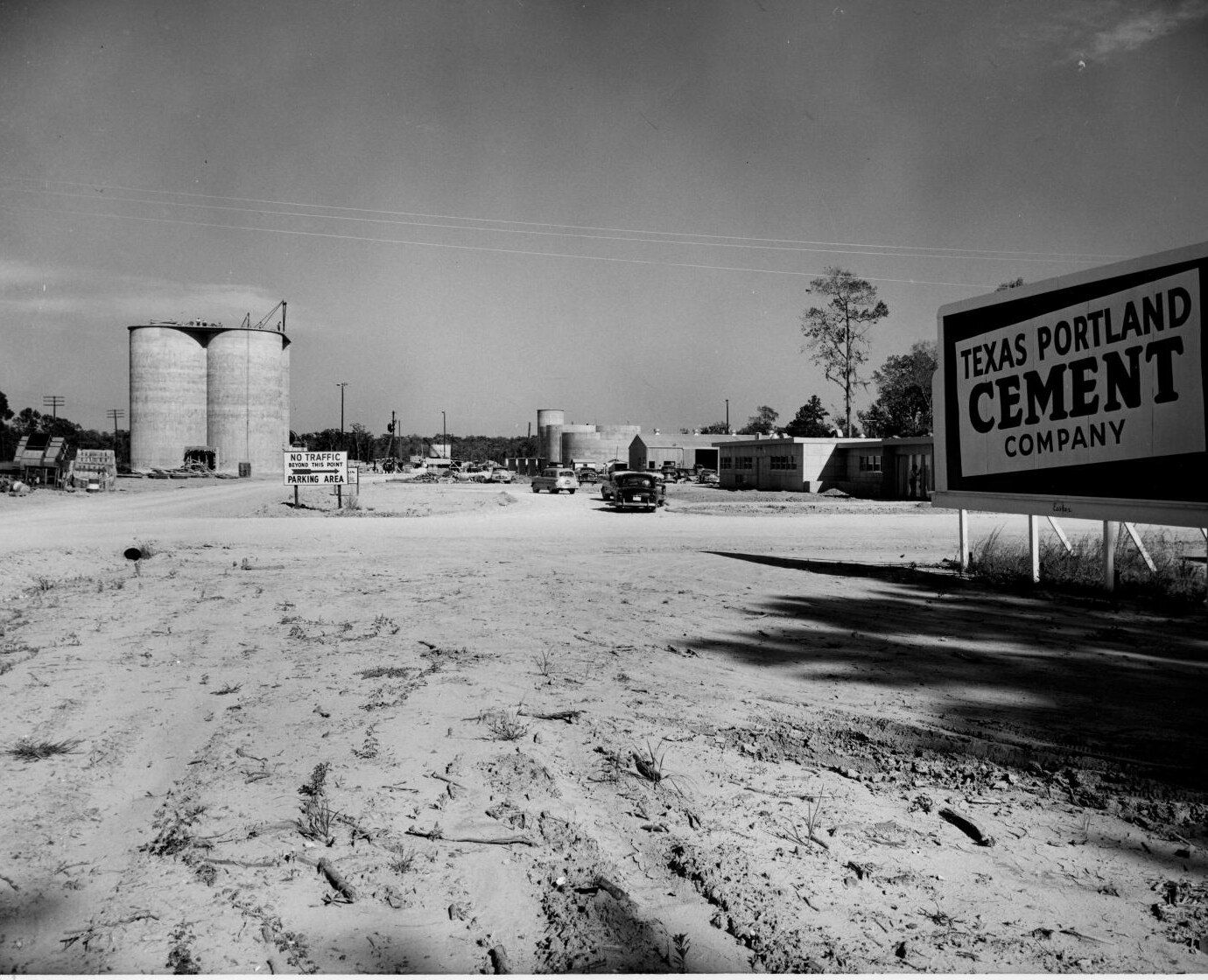
Cement City. The industry Remond's discovery seeded grew into an incorporated
company town between Chalk Hill and Westmoreland roads: plants of Trinity Portland Cement
(opened 1907) and Southwestern States Portland Cement, a post office, a school system absorbed
into Dallas ISD in 1928, and the workers' village of Cemento Grande, whose small cemetery —
El Camposanto de Cemento Grande — still lies behind the gates on Cockrell Hill Road.
Tragedy
The cliffs he read so carefully did not survive the reading. Cement is rock burned and
ground to powder; an industry built on it does not preserve what it finds, it consumes it.
The quarrying that followed his discovery leveled the chalk bluffs the La Réunion colonists had
settled beneath a generation before — the same "white cliffs" that gave the colony's own history
its name. The bluff became a pit, then a plant, then a company town.
The town he never lived to see kept absorbing industry long after his name had left it. In
1934 a lead-battery smelter opened on Westmoreland Road, inside the corridor his cement discovery
had founded — a different company, a different material, but the same ground, made available to
extraction because he had proven, decades earlier, that this stretch of West Dallas was worth
digging into. That smelter ran fifty years and left lead dust in the soil of homes and a
public-housing complex nearby; the Environmental Protection Agency listed it as a Superfund site
in 1995, and the cleanup outlasted the twentieth century. None of that is Remond's doing. All
of it happened on the ground he opened.
Call it Icarian: a man proves the wax will hold, flies exactly as high as his own discovery
can carry him, and never lands anywhere near the money it makes for everyone who comes after.
Call it the older, Oedipal shape — a man reads the riddle written into his own ground correctly,
and the answer consumes him and the place both. Either way he is a fair symbol for the city that
grew up around him: right about what the land held, and out of the room by the time anyone
decided who it was for.